
Finished component reference · drawing-based production
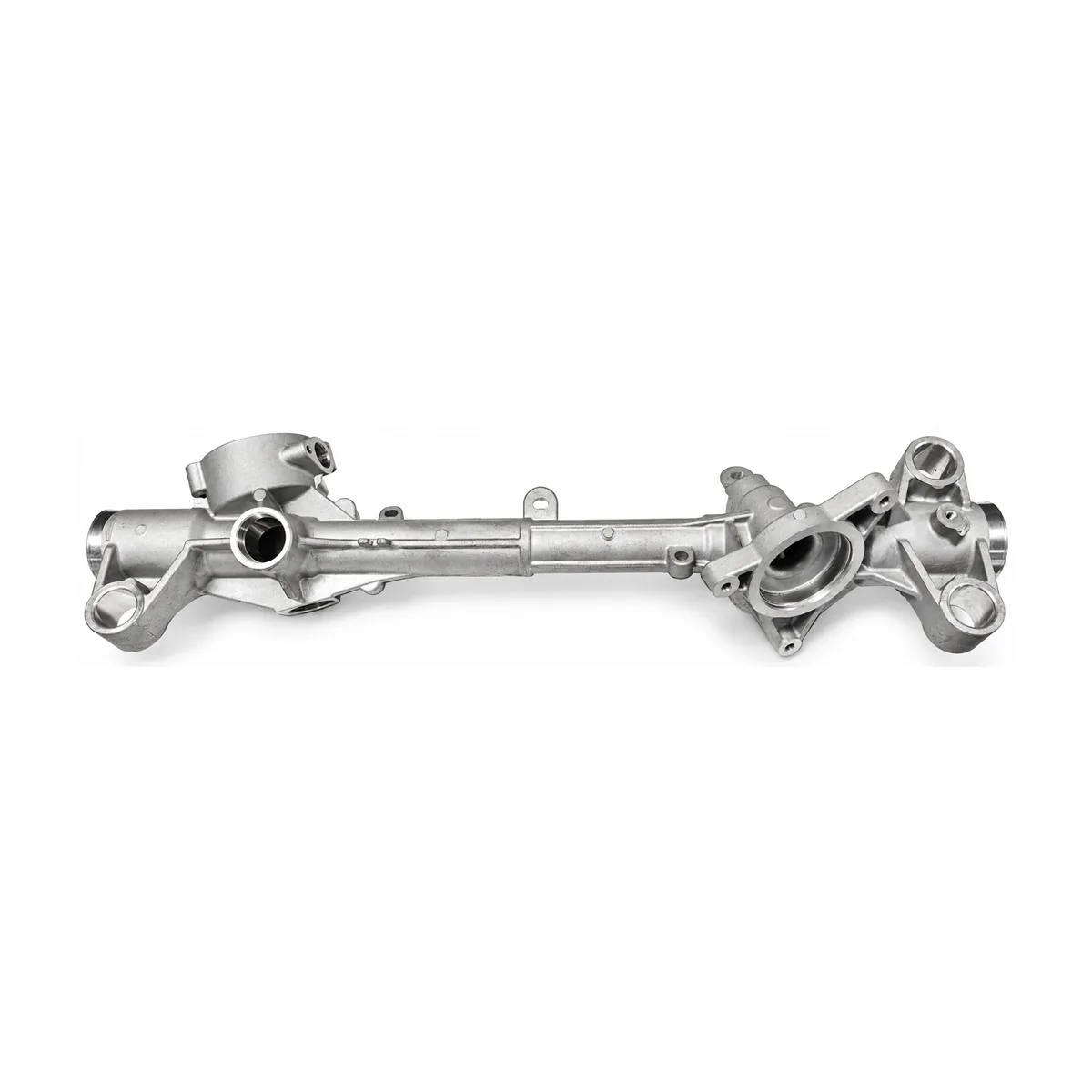
Multi-Port Aluminum Die Cast Mechanical Housing
A long branched casting with multiple bosses, ports and machined circular interfaces. Mechanical linkage, steering, drive or control assemblies only after the actual load path, fluid boundary and mating components are identified.
 Aluminum alloy; exact grade confirmed by drawing and purchase specification
Photo-backed manufacturing evidence
Use the finished component as a reference, then control the new project from its drawing.
The photographs show a completed Huabo production example. They support discussion of comparable geometry, machining access and finish handling, but they do not define the alloy, dimensions, tolerances or performance limits for another project.
| Review area | What the photograph supports | What the current project must define |
|---|---|---|
| Finished-part evidence | A real completed component photographed after secondary operations | Current 3D model, controlled 2D drawing and revision |
| Geometry | A long, branched body links several mounting lugs, bosses and circular ports across widely separated functional interfaces. | Envelope, wall sections, draft, datums and controlled features |
| Application context | Mechanical linkage, steering, drive or control assemblies only after the actual load path, fluid boundary and mating components are identified. | Assembly function, loads, exposure, interfaces and regulatory needs |
| Material basis | Aluminum alloy; exact grade confirmed by drawing and purchase specification | Required alloy standard, material certificate and approved alternatives |
| Production scope | DFM, tooling, high-pressure die casting, trimming and required secondary operations | Annual volume, validation level, surface finish, packaging and delivery requirements |
| Critical control | Use the drawing datum frame to verify port position, bore alignment, mounting-hole relationship, local wall integrity and leakage if the part contains a fluid path. | Numeric acceptance limits, test method, sampling and report format |
Part-specific engineering review
The control plan follows the functional relationships visible in this geometry.
The points below are the practical issues to close during DFM, quotation and sample approval. The customer drawing remains the authority for every numeric limit.
Assembly role to confirm
Mechanical linkage, steering, drive or control assemblies only after the actual load path, fluid boundary and mating components are identified.
Geometry and tooling focus
A long, branched body links several mounting lugs, bosses and circular ports across widely separated functional interfaces.
Machining and finish focus
The distant bores and faces require a deliberate datum chain, fixture access and setup sequence to prevent accumulated positional error.
Inspection and release evidence
Use the drawing datum frame to verify port position, bore alignment, mounting-hole relationship, local wall integrity and leakage if the part contains a fluid path.
Controlled production route
From drawing review to a repeatable finished component.
The final route is selected only after alloy, annual demand, tolerances, finish and validation requirements are known.
- Drawing and DFM reviewConfirm revision, functional datums, wall transitions, draft, parting, slides, machining stock and critical characteristics.
- Tooling and casting trialPlan filling, overflow, venting, cooling and ejection around functional and visible surfaces; record trial corrections before approval.
- Secondary operationsTrim, machine, deburr, clean and finish only to the controlled route, with fixtures transferring the agreed datum scheme.
- Inspection and releaseLink material records, first-piece results, appearance evidence and any functional test to the current drawing revision.
RFQ and validation package
Send the inputs that determine tooling, machining and inspection.
Provide a STEP or native 3D model together with the controlled 2D drawing. Include material standard, prototype and annual quantities, finish, assembly function, test conditions, documentation and packaging requirements.
For this component, identify: load path, fluid or lubrication boundary, mating components, datum hierarchy, port tolerances and functional test method
A complete RFQ allows casting, machining, finishing and inspection to be quoted as one traceable scope. Assumptions should be listed before tool authorization.
Request a quotation for this component family.
Reference “Multi-Port Aluminum Die Cast Mechanical Housing” and attach the current drawing, annual demand, finish and quality requirements.