
Painting, coating, blasting and anodizing
Die Casting Surface Finishing
Surface preparation and finishing for aluminum and zinc die cast parts, including sandblasting, painting, powder coating and black anodizing examples.
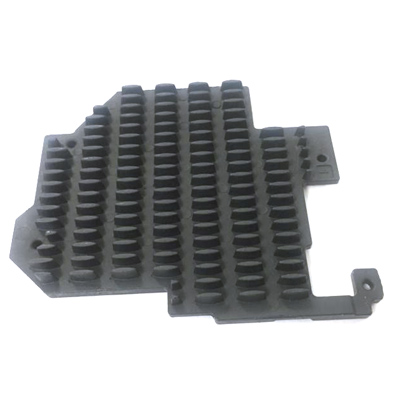 Drawing-based manufacturing
Scope and control
Decisions are made from the part, not a generic service menu.
Surface preparation and finishing for aluminum and zinc die cast parts, including sandblasting, painting, powder coating and black anodizing examples.
The quotation should state the part function, material, annual volume, critical characteristics and approval evidence. These inputs determine equipment, tooling, fixtures, secondary operations and the practical inspection route.
Manufacturing feasibility is reviewed against the actual drawing. Tight tolerances, appearance limits, pressure tests or special documentation are confirmed before they become production commitments.
- Review point
- Substrate condition and pretreatment route
- Review point
- Visible zones, color, gloss and texture standard
- Review point
- Masking of threads, seals and machined interfaces
- Review point
- Film thickness, adhesion and packaging protection
Engineering inputs and production evidence
Define critical requirements before tooling and process release.
A comparable quotation requires the alloy, annual volume, critical dimensions, datum scheme, secondary operations, finish, validation and packaging requirements to be agreed in writing. Production evidence is then matched to those approved requirements.
| Control stage | Project definition | Production evidence |
|---|---|---|
| Substrate condition | Casting alloy, porosity exposure, machining, oils, oxide and repair history influence finish performance. | Pre-finish cleanliness and defect limits are agreed before the appearance master. |
| Pretreatment route | Blasting, chemical preparation and conversion steps must suit alloy and service exposure. | Process route and any required adhesion or corrosion validation are confirmed from the finish specification. |
| Masking and contact | Threads, gasket lands, heat-transfer faces, grounding points and precision fits may need restricted film. | Masking drawing, plugs/caps, rack points and permitted contact marks are approved. |
| Color and texture | Visible zones need objective lighting, distance, color/gloss or a physical master. | Appearance inspection uses the agreed orientation and acceptance sample, not an undefined “good surface” instruction. |
| Film verification | Thickness, cure and adhesion methods depend on the specified coating system. | Method, sampling and limits are written into the project plan before series release. |
| Post-finish protection | Finished components can be damaged during unmasking, inspection, stacking and export shipment. | Final gauging, separators, wrapping and packing audit protect both cosmetic and functional zones. |
Review the supporting quality evidence in IATF 16949 certificate and scope and Huabo quality-system overview.
Related products
Production examples connected to this capability.
Select a component to review its geometry, key controls, adjacent processes and industry application.
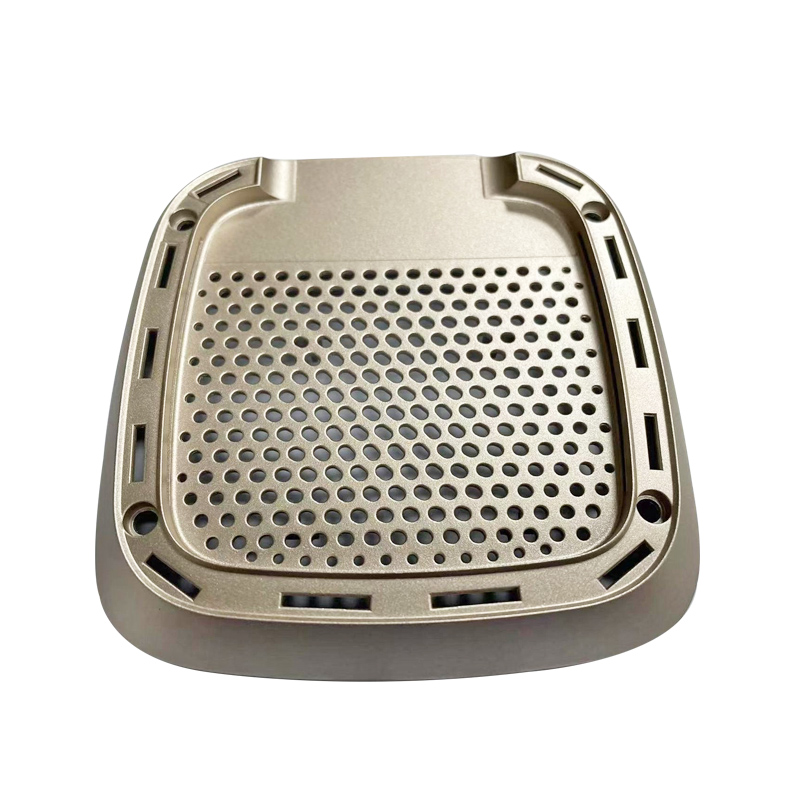 Aluminum die casting
ADC12 Perforated Aluminum Panel with Sandblasting and Coating
Ventilated electronics and communications equipment panels.
Review product and process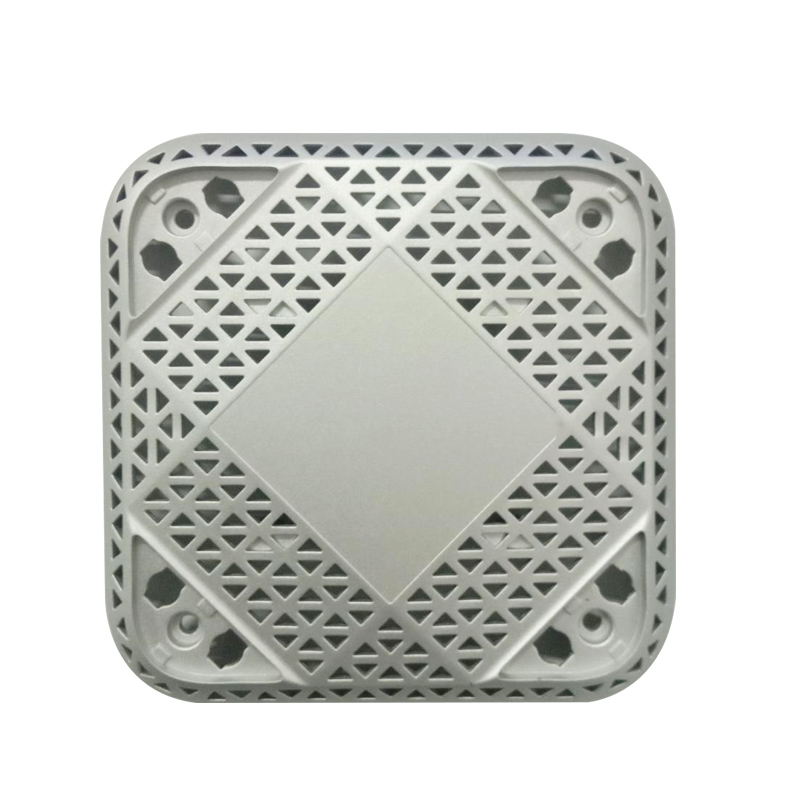 Aluminum die casting
ADC12 Grid Panel with Sandblasting and Coating
Equipment ventilation, electronics protection and communications enclosures.
Review product and process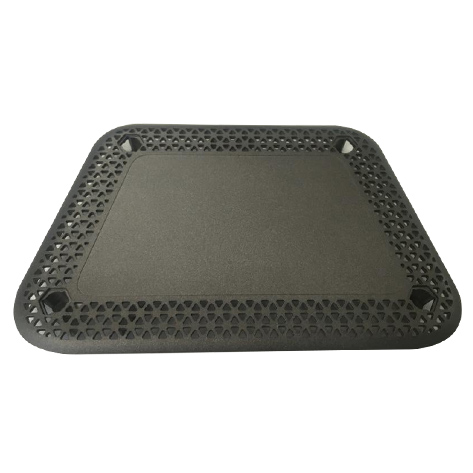 Aluminum die casting
ADC12 Square Ventilation Panel with Coating
Electrical cabinets, communications hardware and equipment ventilation.
Review product and process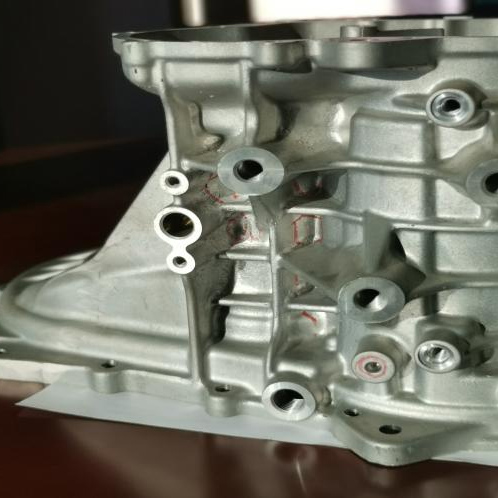 Aluminum die casting
Sandblasted ADC12 Gearbox Housing
Motor drives, reducers and industrial transmission assemblies.
Review product and process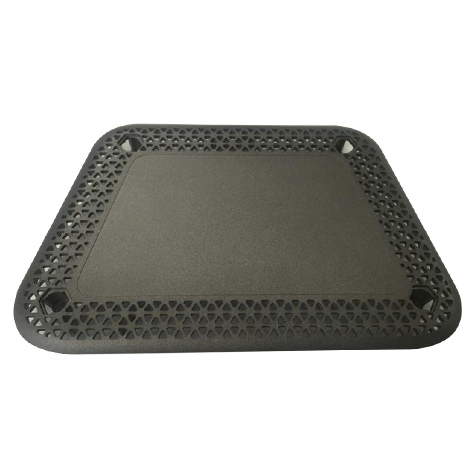 Aluminum die casting
ADC12 Square Mesh Housing with Sandblasting and Coating
Electronics, communications and ventilated control modules.
Review product and process Aluminum die casting
ADC12 Round Vent Cover with Sandblasting and Coating
Fans, motors, electronics and protected ventilation assemblies.
Review product and processProcess handoff
Keep engineering decisions connected across operations.
A robust route connects casting datums to machining fixtures, protected surfaces to finishing, and drawing characteristics to inspection. That coordination is especially important for exported repeat-production parts where revision changes must be visible to every operation.
- ReviewConfirm geometry, material, volume and critical requirements.
- PlanDefine tooling, process sequence, fixtures and measurement access.
- ValidateUse trials and samples to close dimensional, functional and appearance issues.
- ControlRelease repeat production with agreed checks, records and change control.
Comparable quotation scope
Make the capability commitment visible before supplier nomination.
A quotation for die casting surface finishing should identify what Huabo performs, what is coordinated with an approved external process where applicable, and what remains excluded or pending customer confirmation. It should connect the named drawing revision to material, tooling, fixtures, secondary operations, samples, reports and delivery assumptions.
Commercial comparison becomes unreliable when one supplier includes gauges, finishing, first-piece reports or export packaging and another does not. Ask every bidder to return the same included, optional, excluded and unresolved scope. Close engineering deviations before authorizing tooling or fixing the series price.
After approval, changes to drawing, material, tool, fixture, process, finish or inspection method should follow the agreed notification and revalidation route. This keeps repeat-production evidence tied to the product revision and ensures the approved drawing and control plan govern manufacturing.
- Controlled 3D and 2D revision
- Alloy and permitted alternatives
- Prototype, annual and batch demand
- Included tooling and secondary operations
- CTQs, tests, reports and sample quantity
- Finish, packaging, delivery and change-control assumptions
Common sourcing questions
Clarify the RFQ before comparing quotations.
Commercial comparison is more reliable when suppliers quote the same technical and approval scope.
Which finishes has Huabo supported?
Production examples include sandblasting, coating, automotive painting and black anodizing.
What should a coating RFQ include?
State the finish standard, color, gloss, texture, film thickness, adhesion test, masking and corrosion requirement.
How are cosmetic defects judged?
Define viewing distance, lighting, approved sample and permitted defect limits before production.
Discuss Die Casting Surface Finishing.
Attach the drawing and list the material, volume, critical interfaces, finish and required records.