
Quick answer
A useful China die casting supplier audit follows one representative part from quotation and drawing revision through material, tooling, casting, machining, finishing, inspection, nonconformance and shipment. Certificates and equipment lists are supporting evidence; the core question is whether the factory can link requirements, controls, records and corrective action for a real order.
- Buyer decision
- Can this supplier control repeat export production?
- Use this when
- Shortlisting or approving a China factory
- Expected output
- Risk-based findings with evidence and owners
A practical audit framework for overseas buyers covering technical ownership, tooling, process control, machining, inspection, change control and export communication.
Terms used in this guide
For this china supplier qualification, the following terms keep drawing, quotation and supplier-review language consistent. The controlled project specification remains authoritative.
Process audit
Evaluation of how requirements are translated into actual controls and records for a production route.
Traceability
The ability to connect material, process, inspection and shipment identity at the agreed level.
Special process
An operation whose result may not be fully verified by later inspection and therefore needs process control.
Corrective action
A documented response that contains the problem, identifies root cause and prevents recurrence.
Decision summary
The decisions below establish the technical basis for china supplier qualification before price or lead time is compared.
| Decision | What to define | Why it matters |
|---|---|---|
| Audit method | Follow one live order | Better evidence than touring equipment alone |
| Technical ownership | Named handoffs | Tooling, casting, machining and finish need clear responsibility |
| Record test | Drawing → control → result → shipment | Confirms traceability works as a system |
| Export readiness | Communication + packaging + documents | Quality includes the commercial handoff |
Audit the complete route
Do not review the casting machine in isolation. Follow one representative part from drawing and revision control through tooling, incoming material, casting parameters, trimming, machining, finishing, inspection, packing and shipment.
Check who owns each handoff and how outsourced processes are approved and controlled. A clear responsibility map is more useful than a long equipment list.
Sample records, not just procedures
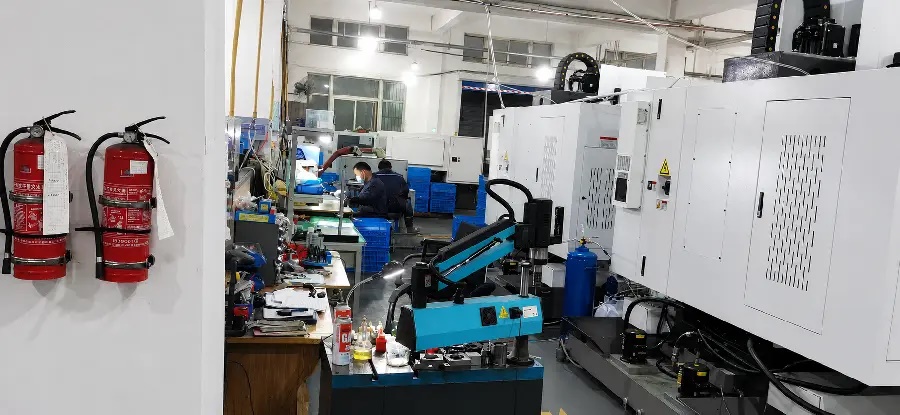
Select a current production order and compare the drawing revision, control plan, work instructions, inspection results, nonconformance history and shipment identification. Verify that records are traceable to the same batch.
Ask how first-piece approval, tool maintenance, fixture verification, gauge calibration and process changes are documented.
Test communication and quotation discipline
Provide a technical question before the audit and evaluate whether sales, engineering and quality return one consistent answer. Review how assumptions and exclusions appear in quotations.
For international programs, confirm file security, revision acknowledgement, bilingual communication, packaging, export documents and escalation contacts.
Apply this engineering decision through About Cixi Huabo and IATF 16949 quality control.
Technical deep dive
Turn a factory visit into a repeat-production risk review
The audit should prove that the supplier can translate one controlled requirement into stable production, evidence and export delivery.
Audit a product similar to the intended program
Choose a representative alloy, part size, machining content, finish and quality risk. A generic facility tour cannot show whether the relevant route is mature.
Ask the supplier to trace a current or recently shipped order. Follow its drawing, material identity, tool, process instructions, inspection, nonconformance and shipping record.
Verify ownership at every process handoff
Identify named owners for DFM, tooling, casting, machining, finishing, quality and customer communication. Check how decisions and changes move between them.
For outsourced coating, heat treatment or tooling work, review supplier approval, purchase specification, incoming verification, issue response and change notification.
Test system behavior with a real problem
Sample a nonconformance or engineering change. Confirm containment, disposition authority, root cause, corrective action, document revision and effectiveness evidence.
A polished procedure is weak evidence if operators, gauges and records do not reflect it. Compare documents with actual shop-floor practice and traceability.
Evidence to request and retain
| Evidence group | Minimum useful record |
|---|---|
| Product trace | PO/drawing through shipment for one batch |
| Capability match | Relevant press, tooling, machining and inspection |
| System test | Change or nonconformance handled end to end |
| Export readiness | Communication, packaging, labels and documents |
Audit question, evidence and red flag
Ask for records tied to one live or recently shipped custom part.
| Audit topic | Objective evidence | Red flag |
|---|---|---|
| Revision control | Released drawing at each operation | Obsolete print remains at workstation |
| Tool and fixture control | Maintenance/status tied to product | No history or owner for corrections |
| Process control | Control plan matches observed checks | Recorded limits differ from shop practice |
| Outsourced finishing | Approved supplier, order and incoming evidence | Responsibility and change notice are unclear |
| Nonconformance | Segregation, disposition and corrective action | Rejected material can re-enter production |
| Export handoff | Pack standard, label and shipment trace | Good parts lose identity or protection at dispatch |
Failure modes and controls
For china supplier qualification, each risk below is tied to a cause, product consequence and measurable prevention or validation control.
| Risk | Typical cause | Possible consequence | Recommended control |
|---|---|---|---|
| Showroom audit | Only clean areas and certificates are reviewed | Real controls remain unknown | Select a current part and trace its complete route |
| Procedure without use | Documents exist but operators use another method | System and shop floor diverge | Compare procedure, work instruction and actual observation |
| Hidden outsourcing | Coating or tooling supplier is not controlled | Finish or delivery variation | Review approval, incoming verification and change notification |
| Weak revision control | Old drawing remains at one operation | Mixed or obsolete product | Trace revision acknowledgement and document removal |
| Slow technical escalation | Sales cannot coordinate engineering/quality response | RFQ and issue closure stall | Test a real question and named escalation path |
Recommended engineering workflow
Apply this sequence to the china supplier qualification and record unresolved assumptions at every gate so later operations do not optimize against different requirements.
- 01Choose a representative live product before the visit
- 02Review quotation assumptions and approved drawing
- 03Walk material, tool, casting, machining, finish and inspection
- 04Sample linked records for one batch
- 05Review nonconformance, change and corrective-action examples
- 06Close the audit with owners, evidence and due dates
Buyer and engineering guidance
How overseas buyers can audit beyond the factory tour
Choose a part relevant to your intended project. A supplier may be strong in small zinc components but lack the press, machining or inspection route for a large aluminum housing.
Test technical communication before and during the visit. Send a real drawing question and observe whether sales, engineering and quality provide one controlled answer with clear ownership.
Close every finding with required evidence, owner and due date. Recheck high-risk actions before nomination; a promised procedure is not the same as an implemented control.
Application example
Example: auditing an integrated casting and CNC program
Start with the purchase order and approved drawing. At each operation, verify the revision, material or batch identity, work instruction, process check and acceptance status. Ask how the part is segregated when a result fails.
Finish with the shipment record and packaging specification for the same batch. If finishing is external, trace the subcontract order, approved process, incoming verification and responsibility for changes. This produces a risk-based audit rather than a generic factory tour.
Engineering and purchasing checklist
Use this china supplier qualification checklist during design review, quotation and sample approval; add any customer-specific regulatory or functional controls.
- Trace one live part from drawing revision to shipment record
- Verify tooling, process, fixture and gauge maintenance records
- Compare control plan characteristics with actual inspection
- Review how outsourced finishing is approved and monitored
- Test technical response, change control and export communication
Frequently asked questions
Is certification enough to approve a supplier?
Certification is useful evidence of a system, but the audit should verify how that system controls representative parts and risks.
Which record sample is most revealing?
A current production order connected to drawing revision, process instructions, inspection results, nonconformance and shipment identification shows whether records work together.
How should overseas buyers test communication?
Submit a real technical question and evaluate response accuracy, ownership, timing and consistency across sales, engineering and quality.
Standards and technical references
For this china supplier qualification, use the current contract edition of each source. These references support review terminology but never replace the controlled drawing or written supplier agreement.
Technical review and revision record
- Technical reviewer
- Huabo Technical Team
- Content owner
- Cixi Huabo Machinery Co., Ltd.
- Engineering basis
- Huabo manufacturing experience, current capability evidence, cited standards and drawing-based production practice
- Reviewed
- 26 August 2026
- Review trigger
- Recheck when equipment, certification, process scope, cited standards or product evidence changes
- Project limitation
- Customer drawings, specifications and written approval records remain the authority for every production commitment
Huabo Technical Team reviews the manufacturing guidance as an organizational technical record. This review does not replace project-specific DFM, customer approval or the controlled drawing for any component.
Drawing-based review
Discuss this requirement with Huabo engineering.
Send the controlled drawing, alloy, annual demand, critical dimensions, finish and validation requirements.