
Custom component · China manufacturer
Aluminum Die Cast Finned Electrical Enclosure
A Huabo manufacturing example for power electronics, industrial controls and outdoor electrical equipment, combining an enclosed housing with external cooling fins, sealing edges and connector bosses. The quotation and control plan are developed from the customer drawing, with special attention to sealing-face flatness, fin fill, enclosure wall integrity and machined opening position.
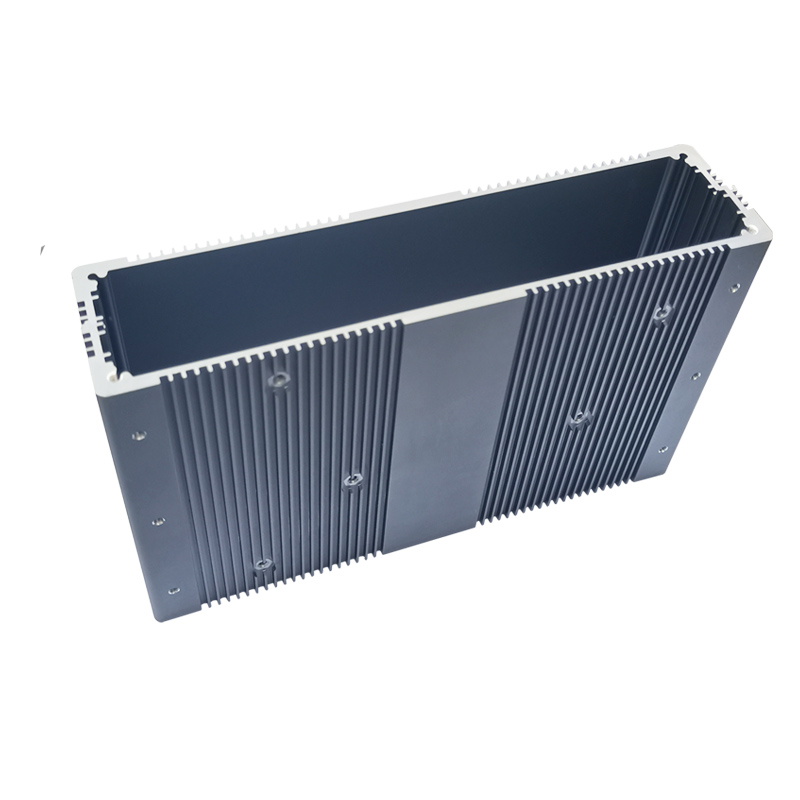 Aluminum alloy; grade confirmed from drawing
Manufacturing basis
Review the component geometry before defining tooling and process controls.
Huabo engineering evaluates functional surfaces, datum relationships, wall transitions, machining stock, finish zones and inspection access against the current 3D model and controlled 2D drawing. The photographed component provides a relevant production reference; the customer specification defines the dimensions, tolerances and performance requirements.
| Review area | Comparable Huabo experience | Current project input |
|---|---|---|
| Comparable component | Huabo manufacturing reference #209 and the photographed production example | Controlled drawing revision and current sourcing requirements |
| Observed geometry | An enclosed housing with external cooling fins, sealing edges and connector bosses | Envelope, wall thickness, weight and all controlled dimensions |
| Application context | Power electronics, industrial controls and outdoor electrical equipment | Actual assembly, loads, exposure and regulatory requirements |
| Material basis | Aluminum alloy; grade confirmed from drawing | Customer material standard, certificate and approved alternatives |
| Manufacturing route | DFM, tooling, high-pressure die casting, trimming and secondary operations | Machine, tool and fixture selection, annual volume and validation package |
| Critical characteristics | Sealing-face flatness, fin fill, enclosure wall integrity and machined opening position | Numeric tolerances, test method, sampling level and report format |
Part-specific engineering control
The control plan starts from the component’s functional relationships.
For this aluminum die cast finned electrical enclosure, the photographed geometry and recorded application point to the control areas below. Numeric limits remain governed by the current customer drawing and purchase specification.
| Control area | Manufacturing concern | Evidence or input to define |
|---|---|---|
| Fin filling and damage | Long or closely spaced fins can be incomplete or damaged during ejection and handling. | Fin thickness/height from drawing, fill acceptance, ejector restrictions and packaging method |
| Thermal interface | The heat-transfer face may require machining and protection from coating. | Flatness, surface texture, machining stock, masking and final cleanliness requirement |
| Machined-zone porosity | Machining the base or mounting features can expose subsurface pores. | Critical-zone map, machining depth and measurable leakage/cosmetic acceptance where relevant |
| Finish compatibility | Anodizing, coating or blasting can change appearance, contact and heat-transfer interfaces. | Actual alloy, finish specification, color standard, masking and approved sample |
| Thermal validation boundary | The casting supplier cannot infer system thermal performance from appearance alone. | Mating material, interface compound, heat load and customer validation method |
To resolve the most relevant design and sourcing decisions, continue with aluminum heat-sink die casting design decisions, thermal-management die cast housing applications, and surface finish selection for thermal and contact faces.
Component assessment
Engineering priorities for this geometry and application.
The observations below identify the relationships that should be closed during DFM, quotation and sample approval. Numeric limits remain governed by the controlled drawing and purchase specification.
Part-specific engineering review
Geometry and functional interfaces
This enclosure combines external cooling fins with a protected internal volume and connector or mounting bosses. The engineering review must reconcile three functions—heat rejection, enclosure sealing and electrical assembly—so coating, gasket lands, grounding areas and thermal faces do not receive conflicting requirements.
Thermal function to confirm
Power electronics, industrial controls and outdoor electrical equipment. Buyers should state the heat source, mating area, mounting force, interface material, airflow and allowable system temperature. Those inputs decide whether the casting only provides a finned structure or also needs a machined, protected thermal-contact surface.
DFM focus for fins and base
An enclosed housing with external cooling fins, sealing edges and connector bosses. Fin direction, height-to-thickness relationship, draft, tip condition and ejection method are reviewed together with base thickness and local bosses. The aim is to fill the thin features without creating avoidable distortion, damage or heavy sections below the thermal interface.
Release evidence that answers the risk
Sealing-face flatness, fin fill, enclosure wall integrity and machined opening position. Inspection should distinguish fin completeness and handling damage from dimensional checks on the thermal face and mounting pattern. If a finish is applied, masking, film condition and cleanliness of contact zones should be verified in the delivered state.
Component manufacturing profile
- Part geometry
- An enclosed housing with external cooling fins, sealing edges and connector bosses
- Application context
- Power electronics, industrial controls and outdoor electrical equipment
- Critical controls
- Sealing-face flatness, fin fill, enclosure wall integrity and machined opening position
- Supply basis
- Made to customer drawing and approved sample
- Huabo reference
- #209
Controlled production route
From drawing review to repeat shipment.
The exact route is confirmed only after alloy, volume, tolerance, finish, validation and packaging requirements are known.
- Drawing and DFM reviewConfirm revision, wall transitions, draft, parting, slides, projected area, machining stock, CTQs and annual demand.
- Tooling and trialBuild the agreed die route, record trial conditions and correct filling, distortion, trimming or appearance issues before sample approval.
- Casting and secondary operationsDFM, tooling, high-pressure die casting, trimming and secondary operations. Fixtures reference agreed datums, while sealing, thermal, cosmetic and machined surfaces receive the required protection.
- Inspection and production releaseVerify sealing-face flatness, fin fill, enclosure wall integrity and machined opening position. Link the material record, first-piece results, approved sample and any functional test to the controlled revision.
- Repeat shipmentMaintain traceability, monitor agreed characteristics and package the component to protect machined, threaded, sealing and visible surfaces.
Review the supporting factory evidence for IATF 16949 certification and quality evidence and dimensional and material inspection resources.
RFQ and validation package
Information needed for an accurate, comparable quotation.
Send a STEP or native 3D model together with a controlled 2D drawing. State the material specification, prototype and annual quantities, critical dimensions and datums, surface finish, assembly function, test conditions, documentation and packaging requirements.
For this component, mark the features connected to sealing-face flatness, fin fill, enclosure wall integrity and machined opening position. If sealing, bearing, thermal, threaded, load-bearing or cosmetic performance is involved, name the test method, acceptance criteria and sampling level instead of relying on a general “high quality” note.
A complete RFQ lets tooling, casting, machining, finishing and inspection be quoted as one traceable scope. Any assumption or exclusion should appear in the quotation before commercial comparison or tool authorization.
Related production examples
Compare adjacent geometries before submitting the RFQ.
Each component has its own application, geometry, manufacturing route and control priorities. Select the closest example, then send the current drawing for an independent DFM and quotation review.
Request a quotation for this type of component.
Reference “Aluminum Die Cast Finned Electrical Enclosure” and attach your drawing, annual demand, finish and quality requirements.