
Quick answer
Select a finish from service environment, substrate, appearance, dimensional interfaces and validation—not from color alone. Blasting changes texture; paint and powder coating add a film; anodizing converts the aluminum surface and can reveal casting variation. Define pretreatment, visible zones, masking, thickness, tests and packaging together.
- Buyer decision
- Which finish system fits function and appearance?
- Use this when
- Specifying aluminum or zinc cast surfaces
- Expected output
- Finish, masking and acceptance specification
Select a die casting finish by substrate, appearance, corrosion exposure, masking, dimensional allowance and validation method.
Terms used in this guide
For this finish selection guide, the following terms keep drawing, quotation and supplier-review language consistent. The controlled project specification remains authoritative.
Pretreatment
Cleaning and chemical preparation used before the final coating or conversion step.
Class A surface
A project-defined high-visibility appearance zone; its criteria must be stated.
Masking
Protection of threads, seals, contacts or interfaces from finish build-up.
Approved master
A physical sample that establishes acceptable overall color, texture and appearance.
Decision summary
The decisions below establish the technical basis for finish selection guide before price or lead time is compared.
| Decision | What to define | Why it matters |
|---|---|---|
| Sand/shot blasting | Texture and preparation | Not a complete corrosion-protection system by itself |
| Painting/powder coating | Color and barrier film | Masking and film build affect fits and threads |
| Anodizing | Electrochemical conversion | Cast alloy and porosity strongly affect appearance |
| Correct sequence | Part-specific | Machine/finish order follows function, tolerances and exposed surfaces |
Choose by function and substrate
Blasting mainly changes surface texture and preparation. Painting and powder coating add a polymer film. Anodizing changes the aluminum surface and can reveal material or casting variation. The best route depends on environment, appearance, handling and the alloy condition.
Zinc and aluminum castings require different pretreatment and finish controls. Confirm that the proposed system is compatible with the alloy and service exposure.
Define the visible and functional zones
Mark Class A or other visible surfaces, viewing direction, texture, color, gloss and approved sample. Separately identify threads, electrical contacts, gasket lands, heat-transfer faces and machined fits that require masking or restricted build-up.
Film thickness can change fit and thread engagement. Include finish allowance in dimensional planning instead of treating coating as an operation added after machining.
Validate and protect the finished part
Specify adhesion, corrosion, color-difference, gloss, thickness or other tests only with a method and acceptance limit. Packaging should prevent rub marks, edge damage and contact between visible surfaces.
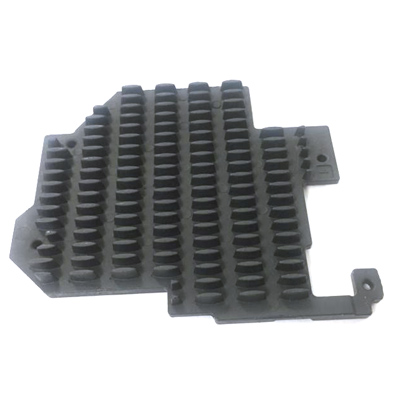
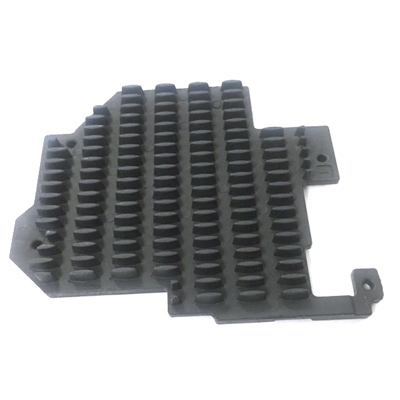
Huabo production examples include blasted and coated ADC12 panels, black-anodized heat sinks and painted automotive components with different masking and appearance-control requirements.
Apply this engineering decision through Surface finishing capability and Painted automotive parts.
Technical deep dive
Specify the complete finish system—not a color name
Substrate, preparation, film or conversion process, masking, tests and packaging all affect the finished result.
Classify service and appearance separately
Outdoor corrosion, chemical exposure, heat, electrical grounding and wear are functional requirements. Color, gloss, texture and defect visibility are appearance requirements.
A system may satisfy one group and fail the other. Rank the priorities and identify visible zones so the supplier can propose a suitable route and trial plan.
Control dimensional build and protected interfaces
Threads, bearing fits, gasket lands, thermal contacts and grounding points may require masking or post-finish machining. State which final condition controls the dimension.
Include expected film build in tolerance analysis. Inspect the part after the last size-changing operation and remove masking without damaging adjacent appearance zones.
Use defined tests with acceptance limits
Name the adhesion, thickness, corrosion, color or gloss method and its pass/fail limit. Salt spray exposure time alone is not a complete corrosion requirement.
If a customer master sample governs texture or overall appearance, control its identity, storage, viewing conditions and replacement process so production decisions remain consistent.
Evidence to request and retain
| Evidence group | Minimum useful record |
|---|---|
| Finish specification | System, color, gloss, texture and film range |
| Zone drawing | Visible, masked and functional areas |
| Trial result | Representative casting through production route |
| Pack approval | No rub, pressure or contamination damage |
Finish route comparison for die cast components
Final selection depends on the complete specification and a representative trial.
| Route | Typical purpose | Main review risk |
|---|---|---|
| Blasting | Texture, cleaning and preparation | Uneven texture, media retention or feature damage |
| Liquid paint | Color and tailored protective system | Pretreatment, cure, runs and appearance variation |
| Powder coating | Durable polymer film and coverage | Film build at fits, edges, threads and masked zones |
| Anodizing | Converted aluminum surface and appearance | Alloy/surface variation and inconsistent cosmetic color |
| Plating on zinc | Decorative or protective metallic finish | Dimensional build, adhesion and substrate preparation |

Failure modes and controls
For finish selection guide, each risk below is tied to a cause, product consequence and measurable prevention or validation control.
| Risk | Typical cause | Possible consequence | Recommended control |
|---|---|---|---|
| Wrong visual benchmark | Die casting is compared with anodized 6061 extrusion | Approved color or uniformity is unrealistic | Approve a finish sample made from the production casting alloy and route |
| Dimension shift | Film or conversion growth is ignored | Bores, threads or fits leave tolerance | Define coating thickness and compensate or mask functional features |
| Acid bleed/outgassing | Surface-connected porosity traps process media or gas | Stain, blister or pinhole after finishing | Review porosity risk, pretreatment and representative production trials |
| Exposed post-finish cuts | Anodize or coating is removed during later machining | Corrosion or appearance failure at edges | Machine before finish, mask selectively or define approved local protection |
| Packaging damage | Finished faces contact each other | Rub marks, edge chips or gloss change | Specify separators, orientation and clean handling for visible zones |
Recommended engineering workflow
Apply this sequence to the finish selection guide and record unresolved assumptions at every gate so later operations do not optimize against different requirements.
- 01Define service environment and visible zones
- 02Select the substrate alloy and realistic appearance level
- 03Choose pretreatment and finish system
- 04Decide machining–masking–finishing sequence
- 05Approve representative color, texture and defect criteria
- 06Validate thickness, adhesion, corrosion and protected packaging as required
Buyer and engineering guidance
Why a finish trial must use the intended casting
A flat wrought coupon does not reproduce die-cast alloy chemistry, skin condition, part geometry, machining exposure or trapped contamination. Use it for process monitoring, not as the only appearance proof.
Include actual rack or contact points, masking and cure conditions in the trial. These production details can change visible marks and functional dimensions.
Approve packaging with finished parts. Abrasion, separator contamination and part-to-part contact can reject a coating that passed every laboratory test.
Application example
Example: black anodized ADC12 heat sink
A black finish may be achievable, but a high-silicon die-cast alloy should not be expected to match wrought 6061 appearance without trials. The heat-transfer face, grounding points, threads and label areas also need explicit masking decisions.
The release package should use a representative casting sample, not a flat wrought coupon alone. It should define permitted shade variation, visible zones, coating thickness or process class, masking, adhesion or corrosion checks and packaging that protects the fins.
Engineering and purchasing checklist
Use this finish selection guide checklist during design review, quotation and sample approval; add any customer-specific regulatory or functional controls.
- Finish system is compatible with the aluminum or zinc substrate
- Visible zones have color, gloss, texture and viewing criteria
- Threads, gasket lands, contacts and heat-transfer faces have masking rules
- Film thickness is included in dimensional and fit planning
- Adhesion, corrosion and appearance tests name a method and limit
Frequently asked questions
Does sandblasting provide corrosion protection?
Blasting primarily changes texture and prepares the surface; corrosion protection depends on the complete finish system.
Can anodizing hide casting defects?
Anodizing can make material and surface variation more visible, so cosmetic expectations and alloy condition should be reviewed early.
Why is an approved sample useful?
A physical master can communicate color, texture and overall appearance that numerical limits alone may not fully describe.
Standards and technical references
For this finish selection guide, use the current contract edition of each source. These references support review terminology but never replace the controlled drawing or written supplier agreement.
Technical review and revision record
- Technical reviewer
- Huabo Technical Team
- Content owner
- Cixi Huabo Machinery Co., Ltd.
- Engineering basis
- Huabo manufacturing experience, current capability evidence, cited standards and drawing-based production practice
- Reviewed
- 26 August 2026
- Review trigger
- Recheck when equipment, certification, process scope, cited standards or product evidence changes
- Project limitation
- Customer drawings, specifications and written approval records remain the authority for every production commitment
Huabo Technical Team reviews the manufacturing guidance as an organizational technical record. This review does not replace project-specific DFM, customer approval or the controlled drawing for any component.
Drawing-based review
Discuss this requirement with Huabo engineering.
Send the controlled drawing, alloy, annual demand, critical dimensions, finish and validation requirements.