
The practical answer
A useful die casting traceability system links the shipped part to its drawing revision, alloy or material lot, production time window, die and cavity, machine or cell, key process records, secondary operations, inspection status and release record. A date code on the casting is only one identifier. The required granularity and retention period must follow customer, safety, regulatory and contract requirements.
Traceability is valuable when it shortens containment and protects good stock. It becomes theatre when a mark exists but cannot be joined to production and inspection records. This guide shows buyers and manufacturing teams how to define a practical lot, select physical identifiers and test the chain before serial production.
Design the system around the recall or failure question
Start with the decisions a record must support: Which shipments may contain the same condition? Which die cavity or time window produced them? Which material and process records apply? Which inspection released them? A code that cannot answer those questions adds handling without reducing risk.
The answer determines granularity. Commodity cosmetic hardware may be managed by a production lot. A safety-related automotive component can require a narrower chain and customer-specific retention. Do not copy one program’s rules to another. Connect the plan to the quality system, certification scope and the customer’s controlled requirements.
Write the lot-break rules before production starts
“One day” is rarely a complete lot definition. A practical lot may break when the alloy heat or melt changes, a new shift begins, the die is changed or repaired, the machine or cavity changes, a significant process interruption occurs, a secondary operation uses another batch, or the drawing revision changes. The chosen boundaries should isolate risk without creating unusable paperwork.
| Possible lot break | Why it matters | Record to retain |
|---|---|---|
| Material change | Connects chemistry evidence to affected castings | Supplier certificate or internal material reference |
| Die or cavity change | Separates geometry and wear-related risk | Tool and cavity identification |
| Machine, shift or restart | Bounds a process-condition window | Cell, operator/shift and time range as required |
| Repair or parameter intervention | Creates a before/after boundary | Reason, approval and verification result |
| Machining or coating batch | Contains downstream process risk | Work order, fixture/line and batch result |
| Revision change | Prevents mixed configurations | Effective date and first accepted lot |
Separate part marking, container labels and electronic records
Not every field belongs on the casting. Permanent part marking can identify a cavity, date or code when geometry and customer rules permit. A container label can carry part number, revision, quantity and production lot. The electronic traveler or database carries detailed process and inspection evidence. These layers should resolve to one another without manual guesswork.
Choose the least intrusive physical method that survives required cleaning, machining and finishing. Cast-in characters, inserts, laser marking, dot peen, ink and labels each affect tooling, cycle, appearance and durability differently. Marking on a sealing face, thin wall, machined datum or cosmetic surface can create a new defect. Review location during tooling and DFM, not after the die is complete.
Use cavity identification to turn variation into evidence
Multi-cavity tooling can produce cavity-specific dimensional drift, flash, surface defects or cooling behavior. A cavity identifier lets the team compare inspection and complaints against the physical source. It does not prove the process was stable; it makes investigation and containment more precise.
The identifier must remain legible through trimming and any required finish, or be transferred to the downstream record. If a cavity insert is replaced, decide whether the identifier, tool revision or maintenance record changes. Link the rule to inspection frequency and reaction plans on the die casting inspection route.
Connect casting, machining, finishing and release records
A casting lot can be split, merged or rebatched during CNC machining, washing, plating, painting and assembly. The traveler must preserve the relationship instead of resetting the identity at each department. Record input lot, output batch, quantity, scrap and rework so reconciliation remains possible.
- 01Receive and identify the controlled drawing and material requirement
- 02Assign the casting lot and tool/cavity context
- 03Record approved process checks and disposition
- 04Transfer identity through trimming, machining and finishing
- 05Join inspection and functional results to the output batch
- 06Release shipment with label and record reconciliation
Use the CNC machining capability and surface-finishing route to identify where a lot may need to be subdivided.
A traceable record needs a release decision, not a data dump
Inspection files should state what was checked, against which revision and specification, with which equipment, sample or frequency, result, disposition and release authority. A spreadsheet full of values is not useful if the part number, lot and units are missing. When equipment is found out of calibration, the same linkage supports an impact review.
Separate first-article approval from routine lot release. A CMM layout can approve geometry at a defined stage; material, appearance, coating and functional requirements may have different records. Huabo’s guides to CNC datum planning and housing leak testing show why one report cannot stand in for every characteristic.
Example: contain a gearbox-housing bore shift without stopping every shipment
A customer reports a bearing bore outside position. The box label identifies the machining batch; the traveler resolves it to two casting lots and one fixture setup. Cavity IDs show that the condition is concentrated in one cavity after an insert intervention. CMM release data and maintenance timing establish the containment boundary.
Without that chain, the safest action may be to hold all related stock. With verified traceability, the team can isolate the suspect window, inspect defined inventory and protect unaffected lots. Traceability does not replace root-cause analysis, but it determines how quickly the organization can reach the right evidence.
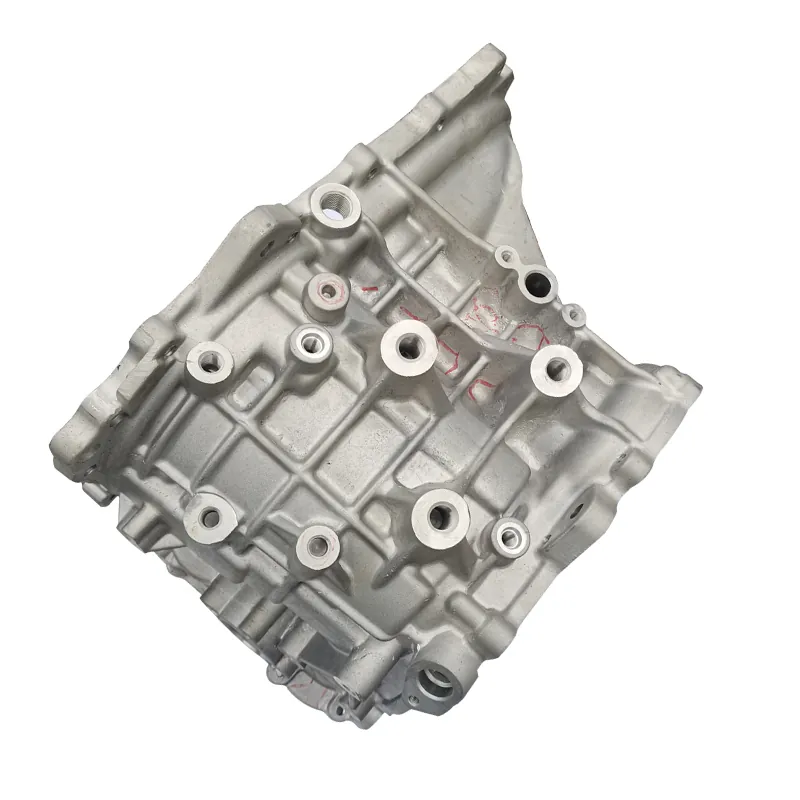
Geometry examples are available on the aluminum gearbox housing and CNC-machined ADC12 housing pages.
Test the chain with a timed retrieval exercise
Before launch, select a shipped label or simulated complaint and ask the team to retrieve the complete record. Then start from a material or process record and trace forward to affected output. Time the exercise, record gaps and verify that codes remain readable after the full manufacturing route.
- Backward trace: shipment to output batch, operations, casting lot and material.
- Forward trace: suspect material, cavity or process window to inventory and shipments.
- Quantity reconciliation: input equals good output, scrap, samples, rework and work in progress.
- Revision check: the effective drawing and inspection plan match the lot.
- Access and retention: records remain retrievable for the customer-defined period.
Include this retrieval test in a focused die casting supplier audit; avoid expanding it into unrelated financial or corporate auditing.
Nine fields make a traceability requirement quotable
| Field | What the buyer should define | Cost or risk affected |
|---|---|---|
| Granularity | Part, container, production lot, cavity or serial | Marking and data volume |
| Lot breaks | Material, time, restart, tool, operation and revision rules | Containment width |
| Mark content | Human-readable code, symbol or both | Space, equipment and verification |
| Mark location | Permitted and prohibited surfaces | Tooling and appearance |
| Process linkage | Required casting and downstream records | System integration |
| Inspection linkage | Characteristics, sampling and release evidence | Control-plan workload |
| Response time | How quickly records must be retrieved | System and staffing |
| Retention | Customer or regulatory period | Storage and governance |
| Change control | Approval for code, method or system changes | Validated configuration |
Attach these requirements to the RFQ package instead of requesting “full traceability” without a defined result.
Questions buyers ask about die casting traceability
Does every casting need a unique serial number?
No. The required level depends on failure consequence, customer rules, volume and process. Lot and cavity identification may be appropriate for one program; serial traceability may be required for another.
Is a date wheel enough?
Only if its granularity and connection to records answer the agreed containment question. A date mark alone may not identify material, cavity, shift or downstream batch.
Should the supplier retain every process parameter?
Retain what the contract, control plan, risk analysis and applicable requirements specify. More data without identity, context or retrieval discipline does not automatically improve traceability.
Can a QR code replace readable identification?
Only if the approved system, durability and access rules allow it. Buyers should decide what happens when a code is damaged or the database is unavailable.
Primary quality references used for this guide
Apply the standards and customer-specific requirements named by the contract. These public sources explain the quality-system context; they do not impose one universal marking scheme.
Technical review record
- Reviewer
- Huabo
- Reviewed
- 23 October 2026
- Evidence basis
- Huabo drawing-based casting, machining and inspection workflow; cited IATF, ISO and NADCA sources
- Scope boundary
- Customer-specific, safety, statutory, regulatory and contractual requirements remain authoritative
- Review trigger
- Recheck after a product, process, lot rule, marking method, software or customer requirement change
This guide does not prescribe a universal serialisation or retention period. Those decisions belong to the controlled program requirements and risk review.
Traceability plan review
Send the failure question the record must be able to answer.
Provide the drawing revision, annual and batch volumes, special characteristics, marking limits, customer retention rules and required evidence. Huabo can review how casting, machining, finishing and inspection records should connect for the quoted route.